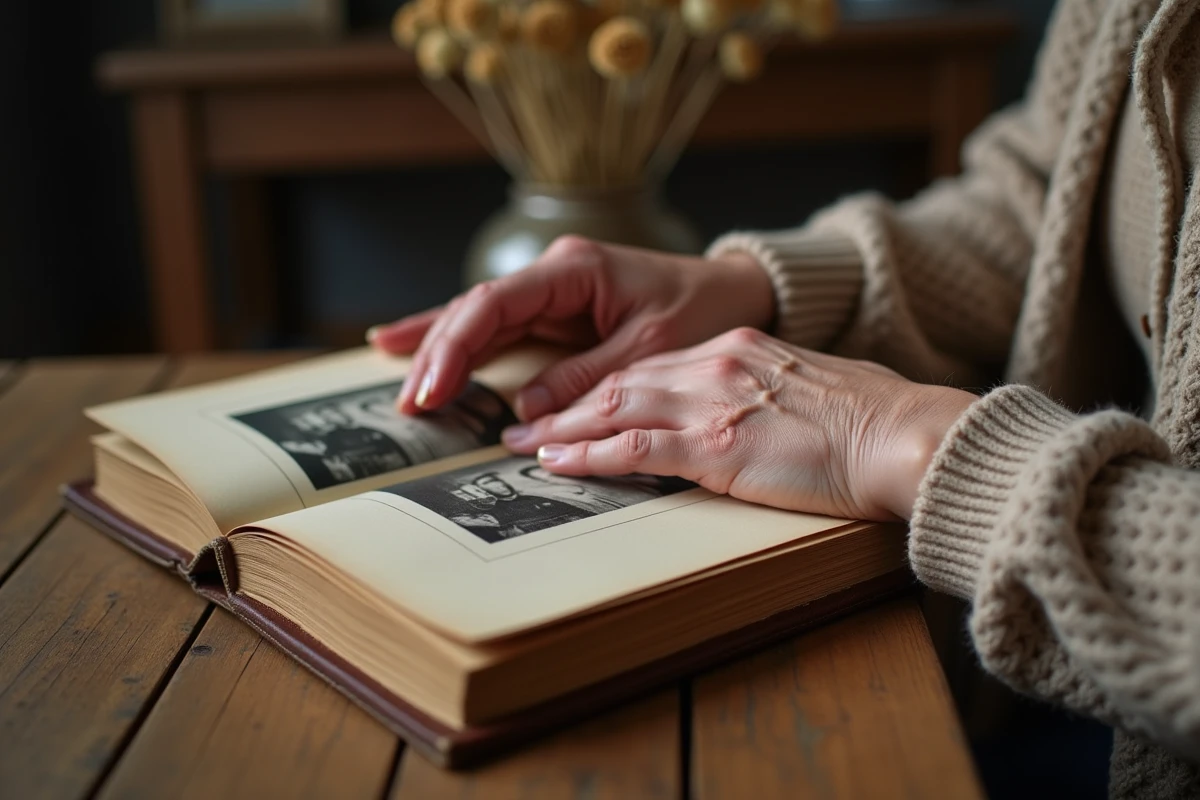
When a mother disappears, each family member carries a different memory. The eldest recalls her voice on the phone, the youngest remembers a smell from the kitchen, and the grandchildren mention a nickname that only she used. Writing a touching poem to pay tribute to a deceased mother in the family means finding a text where everyone can recognize themselves, without forcing emotion or using words that sound false.
Writing a sincere family tribute without falling into cliché
Most of the text templates available online offer literary poems or ready-made formulas. The problem is that when read aloud in front of a gathered family, these texts can seem distant, too solemn, or disconnected from the person we knew.
A tribute that truly touches relies on concrete details. Not on abstract metaphors. A mother is a way of folding laundry, a phrase she repeated, a Sunday dish. The details of everyday life carry more emotion than grand gestures.
You can consult Maman Anonyme for a tribute that starts from this approach, prioritizing heartfelt words over stylistic perfection.
Before looking for the right poem, ask yourself a simple question: if mom heard this text, would she recognize herself in it? If the answer is no, the text is not the right one, even if it is beautiful.

Poem for a deceased mother: choosing between existing text and personal words
The choice often arises when preparing a ceremony or family tribute. Should one read a poem by an author or write one’s own?
When an author’s poem is suitable
Some classic texts work because they express a universal grief. The text attributed to Henry Scott Holland, “Death is nothing,” is often chosen for ceremonies. Its strength lies in its simplicity: it speaks of continuity, not rupture.
An author’s poem helps when emotion prevents writing. No one should feel forced to write a personal text if the sorrow is too intense. Reading someone else’s words is also a form of tribute, provided the text matches what one feels.
When personal words are more accurate
If several family members wish to participate, a text written together has an effect that no published poem can produce. Each person contributes a memory, an anecdote, a character trait. The result doesn’t need to rhyme or follow a poetic structure.
A family tribute doesn’t have to be poetic to be touching. A list of memories read in turn, a prose text recounting an ordinary day with her, a collective letter: all these forms are legitimate.
Writing a tribute text that the whole family can share
The real challenge is not literary. It is to find a text in which every generation, every connection (child, grandchild, daughter-in-law, brother, sister) can find themselves. A very intimate poem written by a single child may inadvertently exclude others.
Starting from a shared memory
Before writing, tap into the collective memory. Ask each loved one: what is your clearest memory of her? The answers will paint a richer portrait than any template. Often, themes naturally recur: her generosity, her laughter, her cooking, her way of bringing the family together.
Three or four concrete memories are enough to build a complete text. There’s no need to recount an entire life. A tribute gains intensity when it focuses on a few precise images.
Structuring the text without rigidifying it
Here’s a simple progression that works both orally and in writing:
- Open with a specific sensory memory (a sound, a smell, a gesture) that immediately situates the person
- Evoking a character trait illustrated by an anecdote known to several family members
- Name the absence without trying to soften it, then return to what she has passed on and what remains
- End with a direct address, as if speaking to her, in one or two short sentences
This framework imposes no style. It simply guides the movement of the text, from memory to emotion, then to transmission.
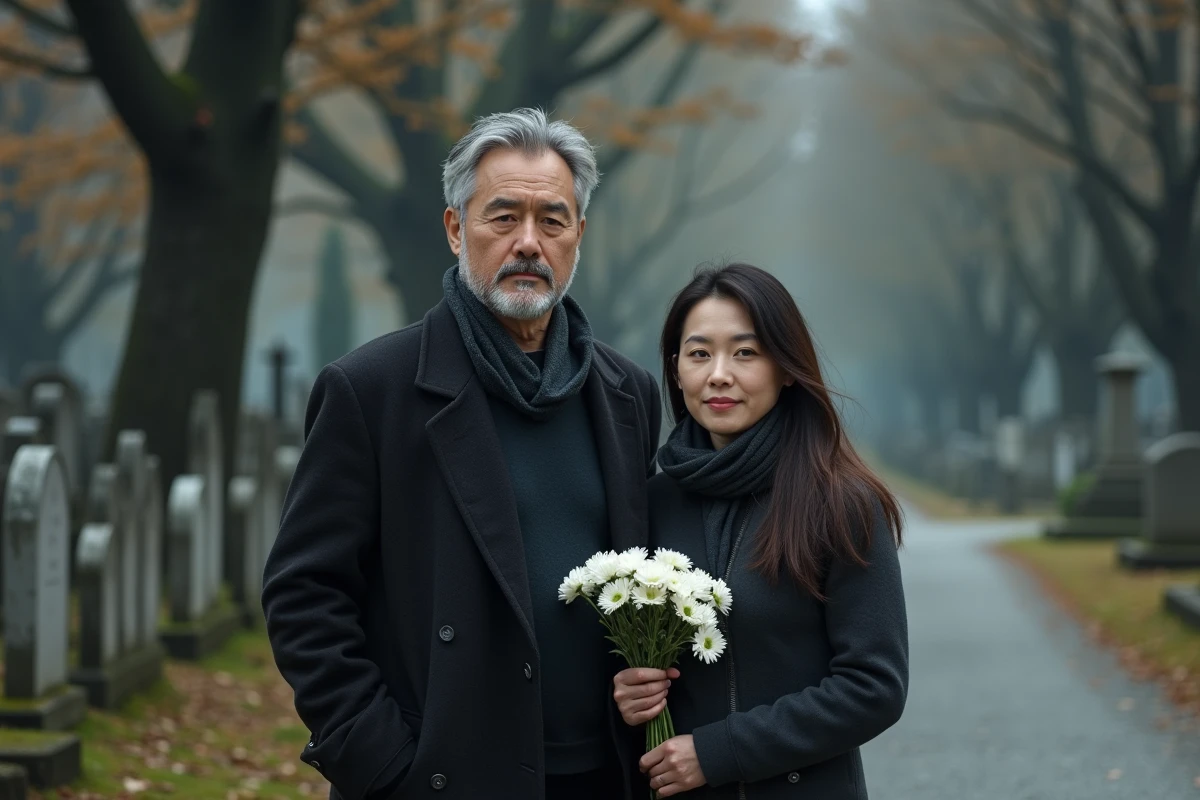
Tribute to a mother: adapting the tone to the ceremony and the family
A text read at a funeral does not serve the same purpose as a poem shared on a death anniversary or engraved on a gravestone. The context changes the register.
During a religious ceremony, a solemn tone and spiritual references may be appropriate. For a secular tribute, a more direct text, rooted in lived experience, will often be better received. Adapting the text to the setting avoids a disconnect between the words and the moment.
Also consider the people present. If young children attend the ceremony, a text that is too dark may frighten them. If the deceased mother had a sense of humor, slipping in a light memory or a funny anecdote is not disrespectful. On the contrary, it is a way to pay her a faithful tribute.
The case of blended or distant families
In families where the ties are complex, the poem or tribute text can become a sensitive area. Favoring consensual memories, qualities recognized by all, avoids discomfort. It’s better to have a sober and fair text than an ambitious one that divides.
When collective writing is difficult, a simple solution exists: each person writes two or three sentences separately, and someone assembles everything while respecting each voice. The result resembles a mosaic portrait, imperfect but authentic.
Keeping a written trace of the memory after the ceremony
The poem or text read on the day of the tribute has a second life. Copied into a notebook, framed, shared in a family message, it becomes a memory object. Some families choose to engrave an excerpt on a gravestone or read it again each year on a specific date.
This gesture extends the tribute beyond the day of the ceremony. It also gives future generations, those who never knew the deceased mother, direct access to what she represented for her loved ones.
The perfect text does not exist. What matters is the one that speaks the truth, with simple words, and that the whole family can reread without feeling that something is missing.