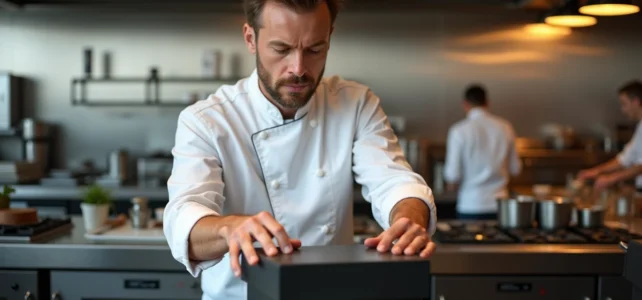
Refined takeout cuisine refers to dishes crafted by chefs, packaged to be consumed outside the restaurant while maintaining their taste and visual qualities. This concept, long reserved for simple dishes like pizza or sushi, has expanded in recent years to include gourmet establishments offering structured menus with appetizers, main courses, and petits fours.
Packaging and assembly: what distinguishes refined from simple takeout
A gourmet dish cannot undergo the same logistical treatment as a burger. The main challenge lies in preserving textures and plating between the kitchen and the customer’s table.
Several high-end establishments have implemented a specific logistics to preserve texture and plating for takeout. Sauces are packaged separately, crispy elements are delivered apart to be assembled at home, and precise reheating recommendations accompany each order.
This level of detail transforms the meal into a participatory experience. The customer finalizes the plating at home, which maintains the crunch of a tuile or the fluidity of an emulsion without compromise. Restaurants like Mousso or Beba in Montreal continue to optimize these protocols since the pandemic, refining their product sheets and instructions included with orders.
Cataloging this type of address requires cross-referencing multiple sources. On ohmyfood.fr, the menus of gourmet restaurants can be viewed before ordering, allowing for the evaluation of the complexity of the dishes offered for takeout.
Tasting menus for takeout: a still rare option in gourmet cuisine
The takeout tasting menu is a format that has recently emerged in fine dining. Structured like a meal in the restaurant (appetizer, starter, main course, petits fours), it replicates the progression of flavors without table service.
This option remains marginal. It is generally offered only on certain evenings, by online reservation, with a limited number of orders per service. Establishments like Toqué! and Monarque in Montreal, or Légende in Quebec, have tested this format for a few years.
The takeout tasting menu requires timed preparation: each element must be ready at the same time so that the customer can enjoy them in the intended order, at the right temperature. Sequential packaging (cold starters first, protected hot dish, desserts at room temperature) requires a kitchen organization distinct from that of classic service.
Chef meal boxes in gourmet shops: an alternative to delivery platforms
In recent years, an offer of refined meal boxes sold in gourmet shops and chef counters has developed alongside delivery platforms. The principle: directly pick up a dish signed by a great restaurant, without digital intermediaries or additional service fees.
Jérôme Ferrer, chef of Europea in Montreal, for example, offers boxes available at retail locations. This hybridization between ready-to-eat and fine dining creates a distinct category, absent from traditional directories of takeout addresses.
The advantage for the consumer is threefold:
- The price remains lower than that of delivery via a platform, as the intermediary’s margin disappears
- The chef controls the packaging from start to finish, reducing the risk of degradation during transport
- Picking up in gourmet shops allows for complementing the meal with additional products (wines, desserts, aged cheeses)
Eco-friendly packaging and refined takeout cuisine: a recent regulatory constraint
The gradual implementation of new Quebec regulations on single-use plastics has pushed gourmet restaurants to rethink their containers. For a high-end establishment, packaging is an integral part of the culinary experience.
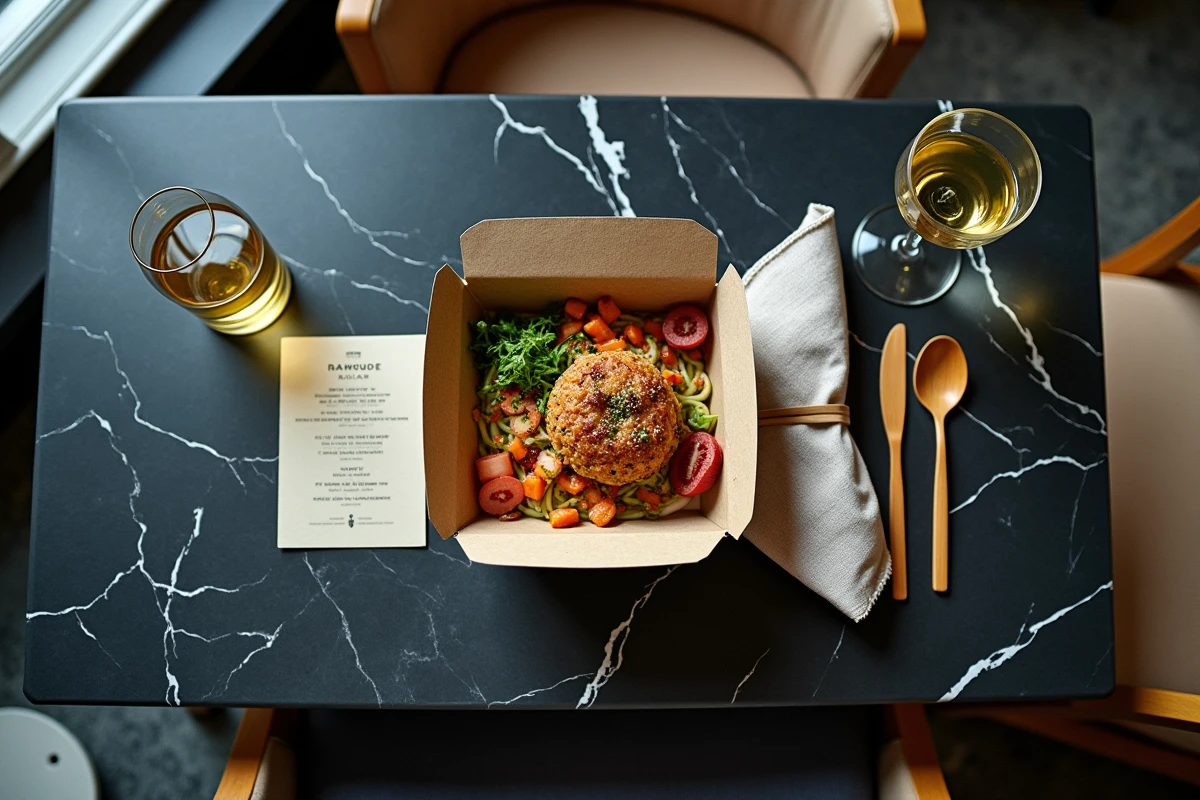
Rigid plastic containers, long used for their leak-proof qualities, are giving way to compostable or reusable materials. The technical difficulty is real: a plant fiber container absorbs moisture differently than plastic, which can alter the texture of a sauce or soften a crispy element in just a few minutes.
Chefs offering refined takeout cuisine must therefore adapt their recipes to the container, not the other way around. Some have chosen returnable glass jars, while others have opted for treated cardboard boxes with separate compartments. This constraint has sometimes led to simplifying certain presentations to ensure that the dish arrives intact.
Criteria for identifying a refined takeout address
Not all restaurants offering takeout service are equal in terms of gastronomy. A few indicators can help spot addresses that maintain a high level of demand outside their walls:
- The takeout menu is distinct from the dine-in menu, with dishes specifically designed for transport and home assembly
- Finishing instructions accompany the order (reheating times, tasting order, sauces to add at the last moment)
- The restaurant limits the number of takeout orders per service to avoid compromising preparation quality
- The containers used are suitable for each type of dish, with a separation of textures (dry, wet, hot, cold)
A restaurant that packs its takeout dishes in the same generic containers as its daily specials does not offer a transposed gastronomic experience. The care taken in packaging reflects the care taken in the kitchen.
Refined takeout cuisine remains a developing segment. Establishments that are seriously committed to it invest as much in last-mile logistics as in the creativity of their dishes, making each address of this type all the more valuable to identify.