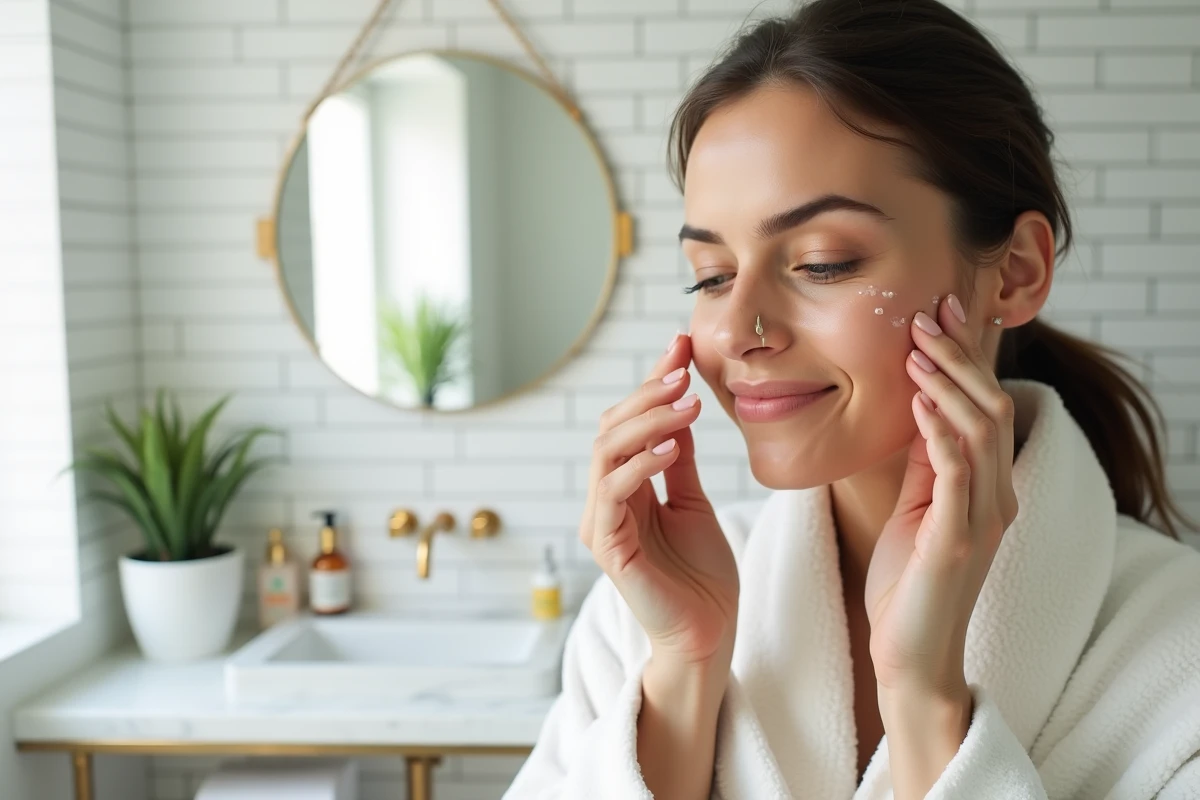
A foundation that treats imperfections while evening out the skin tone, a blush that hydrates the skin beneath the color: these products already exist and are redefining the boundary between makeup and skincare. Current beauty trends are no longer limited to seasonal colors or trendy textures. They reflect a fundamental shift in how formulas are designed, tested, and applied daily.
Hybrid Makeup: When Foundation Becomes Skincare
Have you noticed that some foundations leave the skin feeling more supple at the end of the day than at the time of application? It’s not a coincidence. The principle is called the skinification of makeup: integrating skincare actives directly into makeup formulas.
According to a 2025 report from Mintel, this segment is identified as one of the major growth drivers for makeup in the coming years. Specifically, foundations, blushes, and lipsticks now incorporate niacinamide, peptides, or blue light filters.
The benefits are twofold. First, to reduce the number of products applied each morning. Second, to treat the skin continuously rather than reserving actives for the evening ritual alone. To find all beauty articles on Beauté Chic, this type of hybrid product is among the most followed topics this year.
The trap would be to believe that these formulas replace a serum or night cream. They complement a routine; they do not eliminate it. A foundation enriched with niacinamide works on surface radiance, but it does not penetrate enough to replace a targeted treatment applied to bare skin.
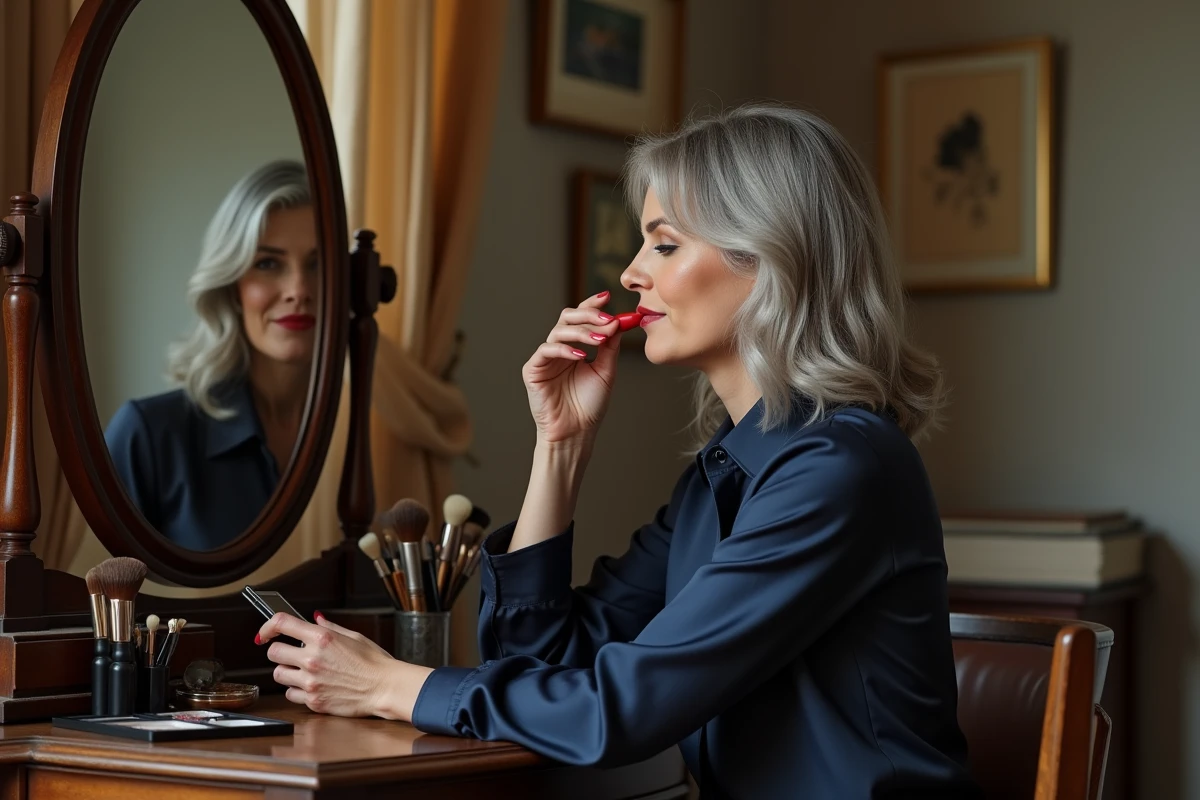
Second Skin Textures and Foundation: The End of Heavy Makeup
Full-coverage foundations are losing ground. The demand is shifting towards lightweight textures, often referred to as “serum foundations” or “tints.” These formulas focus on transparency and blending with the skin rather than opacity.
The visible result changes radically. Instead of masking the skin texture, these products allow it to breathe. Freckles remain visible, and pores do not disappear under a thick layer. The goal is an even complexion without a cakey effect.
How to Choose Between a Serum Foundation and a Tint
The difference lies in the pigment concentration. A serum foundation contains more pigments than a tint, but less than a classic foundation. The tint, on the other hand, resembles a tinted water that unifies without covering.
- Serum foundation: suitable for skin that wants a natural finish with slight correction of redness or uneven tone
- Tint or skin tint: ideal for days without marked imperfections, when a simple veil of color is enough
- Classic foundation: remains relevant for occasions where moderate to high coverage is desired, such as a photo or event
The choice depends on the context, not a universal rule. Alternating between these textures depending on the day is a more realistic approach than betting everything on a single product.
Hair Care and Niche Fragrances: Beauty Beyond the Face
Beauty trends are not limited to the face. Several analyses from specialized beauty retail firms, including NPD Group and Kline, show a marked increase in sales of niche fragrances and hair care products in premium physical channels.
What attracts buyers to these products is not the promise of spectacular results. It’s the search for multisensory experiences: unusual textures, signature scents crafted in salons, attention to the gesture as much as to the result.
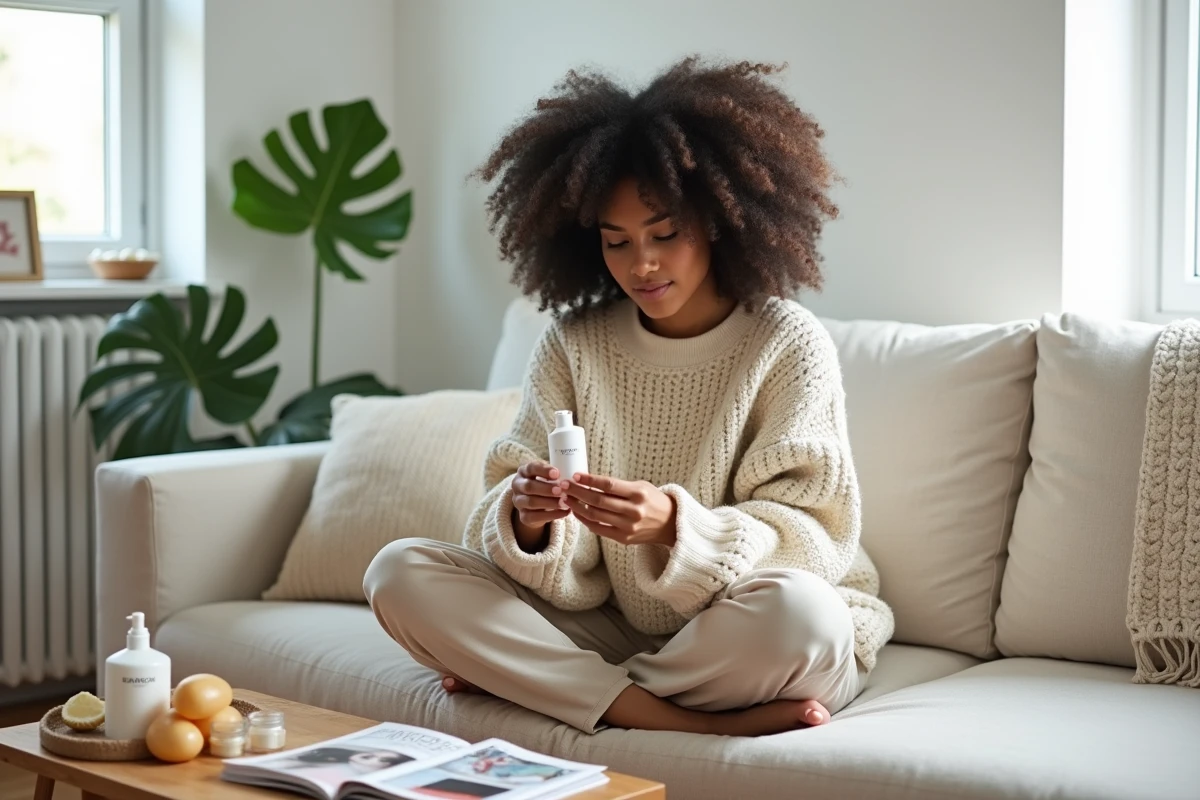
Why Hair Care Takes Up So Much Space
The scalp is treated as a separate care area. Scalp serums, hair scrubs, and targeted masks are multiplying. The idea is simple: a healthy hair starts with a balanced scalp, just as successful makeup begins with well-prepared skin.
Niche fragrances, on the other hand, meet a need for uniqueness. Major heritage houses are returning to the forefront. The Journal du Luxe highlights, for example, the announced return of Marc Jacobs Beauty in June 2026 under Coty’s leadership, a sign that emotionally valuable brands are regaining ground against micro-brands.
Minimalist Beauty Routine: Reducing Products Without Sacrificing Results
Accumulating ten products in the morning and eight at night guarantees nothing. An effective routine relies on choosing the right actives, not on their quantity. The movement towards minimalism in beauty is not a passing trend.
Concentrated formulas allow for fewer steps. A well-dosed serum can replace an essence, a toner, and an ampoule. However, one must know what each product does and what it truly brings.
- Cleanse with a product suitable for your skin type (nourishing soap, cleansing oil, or micellar water) without multiplying double cleansing steps if the skin does not require it
- Target a maximum of one or two actives per routine (for example, niacinamide in the morning, retinal in the evening) rather than piling up serums with similar functions
- Always protect with a sunscreen, even in winter, as SPF remains the most documented anti-aging gesture
Have you noticed that your skin reacts better after a week of vacation where you apply almost nothing? It’s not just the sea air that makes a difference. It’s often the break from product overload that allows the skin barrier to restore itself.
The most sustainable beauty trends are those that simplify without impoverishing. Choosing fewer products, but better formulated, suited to your skin, and used regularly, yields more stable results than a complex routine abandoned after three weeks.