Fashion trends evolve quickly, but the searches of French consumers have been outlining a clear direction for the past two years. Queries related to “quiet luxury” and “old money style” have been steadily increasing in France since the second half of 2023, according to Google Trends.
At the same time, the French Institute of Fashion (IFM) observes in its report “Panorama of the Clothing Market 2024” a significant growth of brands positioned as accessible premium, particularly in coats, leather bags, and shoes. This intersection between the search for refinement and budget constraints is redefining what it means to “have style” today.
Quiet luxury vs. seasonal fashion: two wardrobe logics
Competing articles structure their advice around key pieces of a given season (barrel jeans, oversized sweaters, colorful cropped jackets). This approach works in the short term. It does not address the question that more and more consumers are asking: how to build a coherent wardrobe over multiple seasons.
Quiet luxury follows an opposite logic. The style is based on the quality of materials, the precision of cuts, and the subtlety of finishes, not on constant renewal. The IFM confirms that this positioning particularly attracts those aged 25-45, who seek sophistication without tipping into pure luxury.
| Criterion | Seasonal Fashion | Quiet Luxury / Refined Style |
|---|---|---|
| Relevance Duration | One season (3-6 months) | Several years |
| Purchase Driver | Newness, trendy color | Cut, material, versatility |
| Price Positioning | Variable (fast fashion to luxury) | Accessible premium to discreet luxury |
| Relationship to Logos | Present or absent depending on the brand | Almost absent |
| Google Trends Search (France) | Short seasonal peaks | Continuous growth since 2023 |
This table highlights a gap between the dominant editorial offer (focused on spring or winter trends) and the actual demand, which is leaning towards long-lasting pieces. For those who wish to explore fashion at Tiffany and Co, this prism of sustainable refinement already structures the selections offered.

Durable pieces and structured cuts: what searches reveal
The categories that are growing the most in the accessible premium segment are not the seasonal “must-have” pieces. Coats, leather bags, and shoes are where the growth is concentrated, according to the IFM report. These are items where the cut and material are immediately visible, and a well-thought-out purchase replaces several impulsive buys.
Regarding cuts, the trend is clear: structured silhouettes (sharp shoulders, defined waists, midi lengths) dominate looks associated with refined style. The slightly oversized blazer, straight trousers with a crease, and the shirt dress remain wardrobe staples that transcend seasons.
Materials to prioritize for a refined wardrobe
- Wool with a sufficiently dense weight for coats and blazers, which hold their shape without ironing and withstand several winters
- Full-grain leather for bags and shoes, whose patina improves the appearance over time, unlike coated leathers that peel
- Thick cotton or blended linen for spring pieces, which provide structure without rigidity
The choice of material takes precedence over the choice of color in a sustainable style approach. A well-cut linen dress in a neutral color can be worn with different accessories for years. A synthetic fabric piece in the trendy color of the season loses its relevance in a few months.
Trendy colors and timeless palette: finding the balance
Seasonal palettes (butter yellow for spring 2026, for example) serve as accents, not foundations. Google Trends shows that searches combining “chic capsule wardrobe” with quiet luxury have remained high in France since their peak around the Paris Fashion Weeks of 2024.
A refined wardrobe rests on a foundation of neutral colors (navy, cream, heather gray, black, camel) and incorporates one or two pieces in seasonal tones to refresh outfits without completely rebuilding them. This logic reduces the total number of garments needed and simplifies the composition of looks on a daily basis.
Practical tips for integrating seasonal colors
Limiting “seasonal color” purchases to accessories and low-priced tops allows for following trends without disrupting the wardrobe. A scarf, a pair of earrings, or a knit top in the current shade is enough to update an outfit built on basics.
On the other hand, investing in a coat or bag in a very bold color exposes one to quick fatigue. High-investment pieces benefit from remaining in timeless colors.
Fashion buying strategy: accessible premium as an alternative to luxury
Price increases from major luxury houses since 2022 have created space for brands positioned between mid-range and luxury. The IFM identifies this segment as one that captures customers disappointed by the inflation of traditional luxury, particularly consumers seeking a sophisticated style without paying the premium associated with a logo’s prestige.
This repositioning changes the way fashion purchases are approached. Rather than spreading a budget over many cheap pieces or a single luxury item, the logic of accessible premium focuses on concentrating spending on a few visually impactful categories.
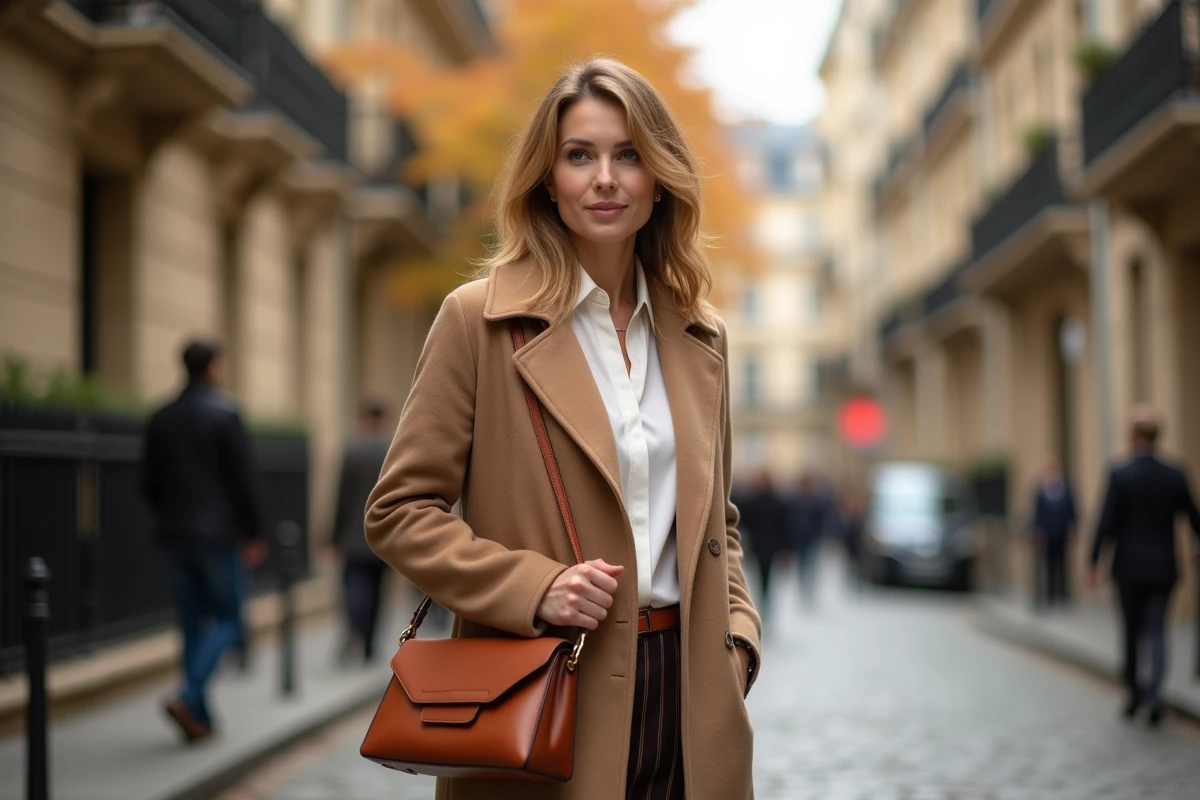
- A well-cut coat in a noble material structures the silhouette and is immediately noticeable, even worn over jeans and a basic t-shirt
- Good quality leather shoes change the overall perception of an outfit, whereas low-quality shoes drag the whole look down
- A simple and well-proportioned leather bag works equally well in a professional context as it does on the weekend
This prioritization of purchases is not new, but it now corresponds to a measurable movement in consumption data and online search. Refinement is no longer measured by the number of pieces purchased but by the relevance of each purchase.
Data from Google Trends and the IFM converge on the same observation: the demand for a discreet style, built on noble materials and structured cuts, is not a passing trend. The peak observed around the Paris Fashion Weeks of 2024 has not subsided. The growth of accessible premium brands in France confirms that this trend is permanently changing shopping habits, well beyond the usual seasonal cycles.