
France is among the European countries with the highest dog population. Adopting a dog is a commitment that can last over a decade, with health, financial, and behavioral implications that traditional guides often treat superficially. Choosing a breed, veterinary care, or dog training is not just a matter of a whim: every decision shapes the household’s daily life for years.
Dog health budget: what insurance now covers
The veterinary expenses represent the most underestimated cost by new owners. Vaccinations, anti-parasitics, sterilization, dental care: costs accumulate from the first months, well before a health issue arises.
In recent years, several French insurers (SantéVet, Carrefour Assurance, Generali) have offered plans that go beyond simple reimbursement for curative care. Some guarantees include prevention, annual check-ups, and anti-parasitics, which changes the way to plan a dog’s health budget on a daily basis.
More recently, offers have included partial coverage for behavioral consultations or veterinary teleconsultations. For a puppy developing anxiety issues or an adult dog whose behavior suddenly changes, this coverage can make the difference between prompt care and months of waiting. It is possible to consult the dog section on Univers Animaux to delve deeper into these health and canine well-being issues.
Field feedback varies on this point: some owners consider these plans profitable from the first year, while others believe that the cost-reimbursement ratio only becomes favorable after a major health incident. Comparing reimbursement limits and waiting periods remains the most reliable approach before subscribing.
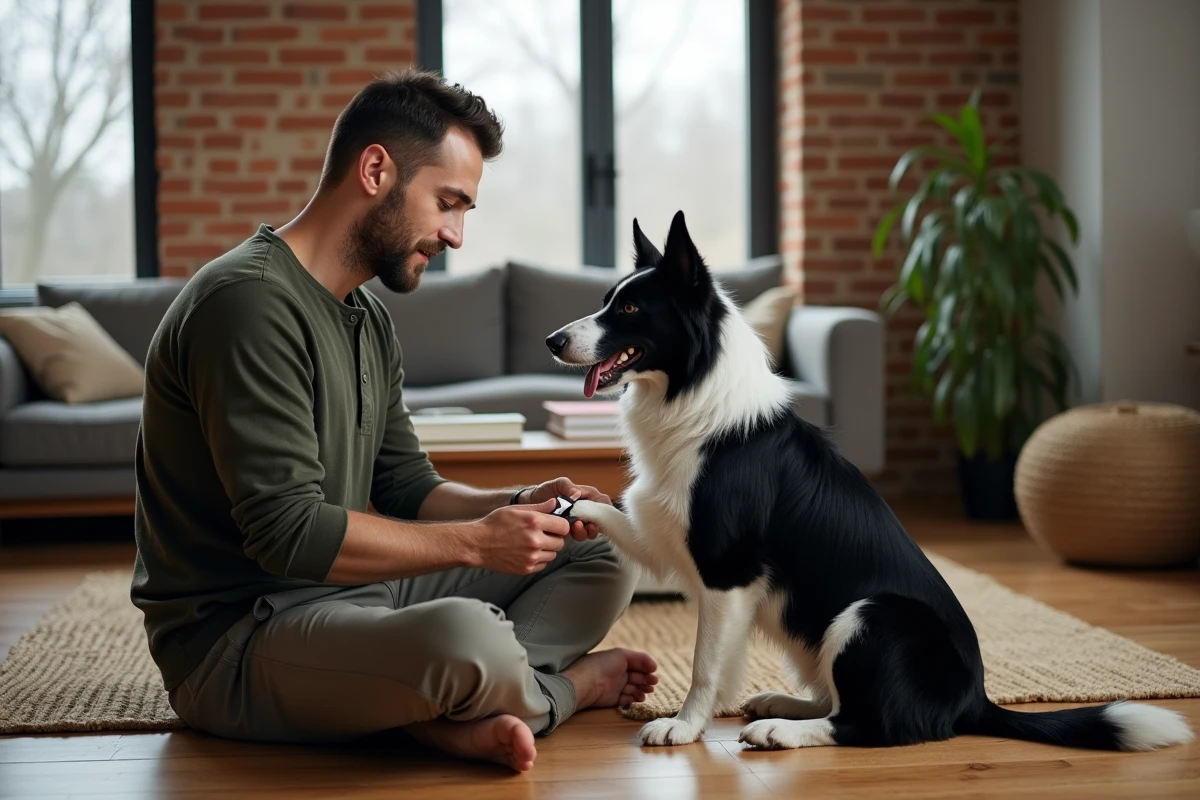
Choosing a dog breed suitable for your lifestyle
The choice of a breed is not limited to a question of size or aesthetics. A shepherd dog placed in an apartment without sufficient mental stimulation will develop destructive behaviors. A mastiff adopted without knowledge of legal obligations can expose its owner to burdensome administrative procedures.
Activity level and canine temperament
Each breed carries a genetic heritage that determines its needs for exercise, social interaction, and cognitive stimulation. A German Spitz, for example, requires structured training despite its small size, as its alert temperament can lead to excessive barking without clear boundaries.
An unchanneled athletic dog poses more problems than an under-stimulated calm dog. So-called sporting breeds (herders, retrievers, pointers) require several hours of daily activity. In contrast, some companion breeds adapt to shorter outings, making them compatible with apartment living or less mobile owners.
Regulatory constraints by category
French legislation imposes specific obligations for category 1 and 2 dogs: declaration at the town hall, behavioral assessment, owner’s aptitude certificate, specific civil liability insurance. These procedures are not optional, and non-compliance exposes one to sanctions.
Before adopting, checking the dog’s category and associated obligations avoids administrative complications that still surprise many households.
Dog training: mistakes that pay off in the long run
Training a puppy begins as soon as it arrives. Delaying training by a few weeks is enough to establish habits that are difficult to correct later. Socialization, in particular, has a critical window: a puppy insufficiently exposed between three and twelve weeks will retain lasting reactivities.
- Inconsistency in commands among household members generates confusion in the dog and slows down the learning of each basic command
- Late recourse to a professional dog trainer often occurs after problematic behaviors (destruction, barking, separation anxiety) have taken hold
- Overuse of toys as a substitute for human interaction does not replace the work of obedience and channeling
The available data does not allow for concluding that a single educational method suits all breeds. However, the consistency of short sessions produces more stable results than long and spaced-out sessions. A few minutes of daily work are worth more than an hour weekly.

Dog sitting and peer-to-peer solutions: a changing market
Holidays and business trips pose a concrete problem that dog guides rarely address from a financial perspective. Specialized platforms (Rover, Pawshake, PetBacker) have structured the dog-sitting market with profile verification, customer reviews, and online booking.
Dog-sitting rates have significantly increased in recent years, pushing some owners toward alternatives. Free homesitting, via platforms like Nomador, offers a service exchange: an individual watches the dog at home in exchange for accommodation. Networks for exchanging care between dog owners are also developing.
These solutions have advantages (familiar environment for the animal, reduced or no cost) but also limitations: lack of coverage in case of an accident, difficulty verifying the caregiver’s skills, lack of recourse in case of problems. Anticipating this expense from the moment of adoption helps avoid last-minute solutions that are rarely satisfactory for the animal.
Dog food and nutrition: adapting the ration at each stage
The nutrition of a puppy differs radically from that of an adult or senior dog. Protein, calcium, and energy needs vary according to age, size, and activity level. An inappropriate diet during growth can cause musculoskeletal disorders in large breeds.
- A growing puppy needs higher nutritional density, spread over several daily meals that gradually decrease with age
- The dietary transition between two types of kibble should take place over several days to avoid digestive issues
- Dietary supplements (omega-3, chondroprotectors) can support the dog at certain stages, but their use is best validated by a veterinarian
The quality of the ingredients matters more than the brand displayed on the packaging. Reading the analytical composition and the list of ingredients remains the most reliable reflex for evaluating kibble or wet food.
Adopting a dog entails a responsibility that goes beyond simple affection. Veterinary budget, breed choice, early education, care solutions, appropriate nutrition: each aspect requires concrete anticipation. Owners who invest time in preparation before the arrival of the animal encounter fewer difficulties later, and their companion benefits directly.