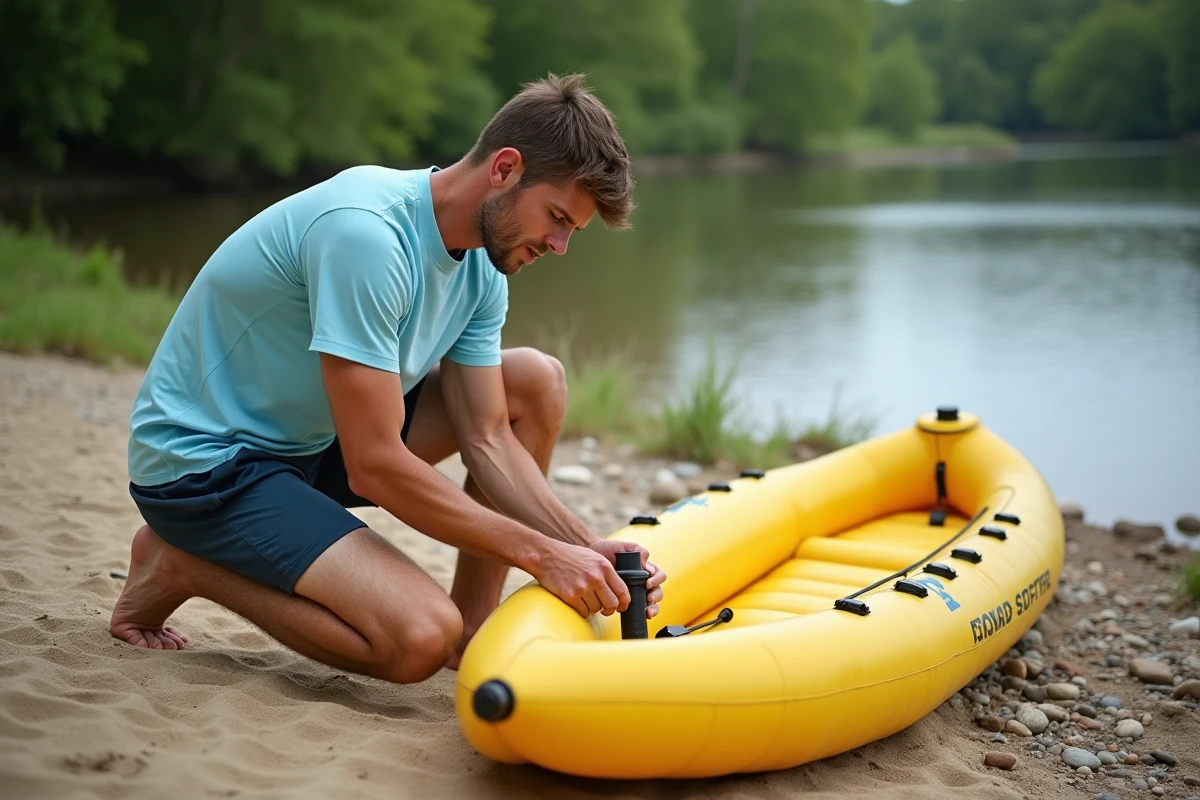
Inflating an inflatable kayak may seem trivial, but the actual pressure in each compartment directly determines the rigidity, stability, and lifespan of the craft. Between the side tubes, the dropstitch floor, and the high-pressure valves, each element requires a different approach. This article measures the performance gaps between inflation methods and identifies the parameters that truly change behavior on the water.
Hand pump, electric pump, and double action inflator: the technical comparison
The choice of inflator determines the preparation time, inflation accuracy, and physical effort. Here is a comparison of the three most common solutions for inflating an inflatable kayak.
| Type of pump | Estimated inflation time | Pressure accuracy | Physical effort | Size |
|---|---|---|---|---|
| Single action hand pump | Long (air sent only on the downstroke) | Low without pressure gauge | High | Low |
| Double action hand pump | Moderate (air sent on both up and down strokes) | Medium with built-in gauge | Moderate | Low |
| 12 V electric pump or battery | Short | High (automatic shut-off on some models) | None | Medium |
The double action pump significantly reduces the number of pump strokes compared to a single action. It sends air with each movement of the piston, which divides the inflation time without resorting to electricity.
Electric pumps with automatic shut-off offer a clear advantage in accuracy. They stop at the programmed pressure, eliminating the risk of overinflation. However, they require a power source (cigarette lighter, external battery) and add weight to the carrying bag.
To learn in detail how to inflate an inflatable kayak according to the type of valve and pump, the choice of the adaptable nozzle remains a often underestimated point: a poorly sized nozzle causes leaks within the first seconds of inflation.
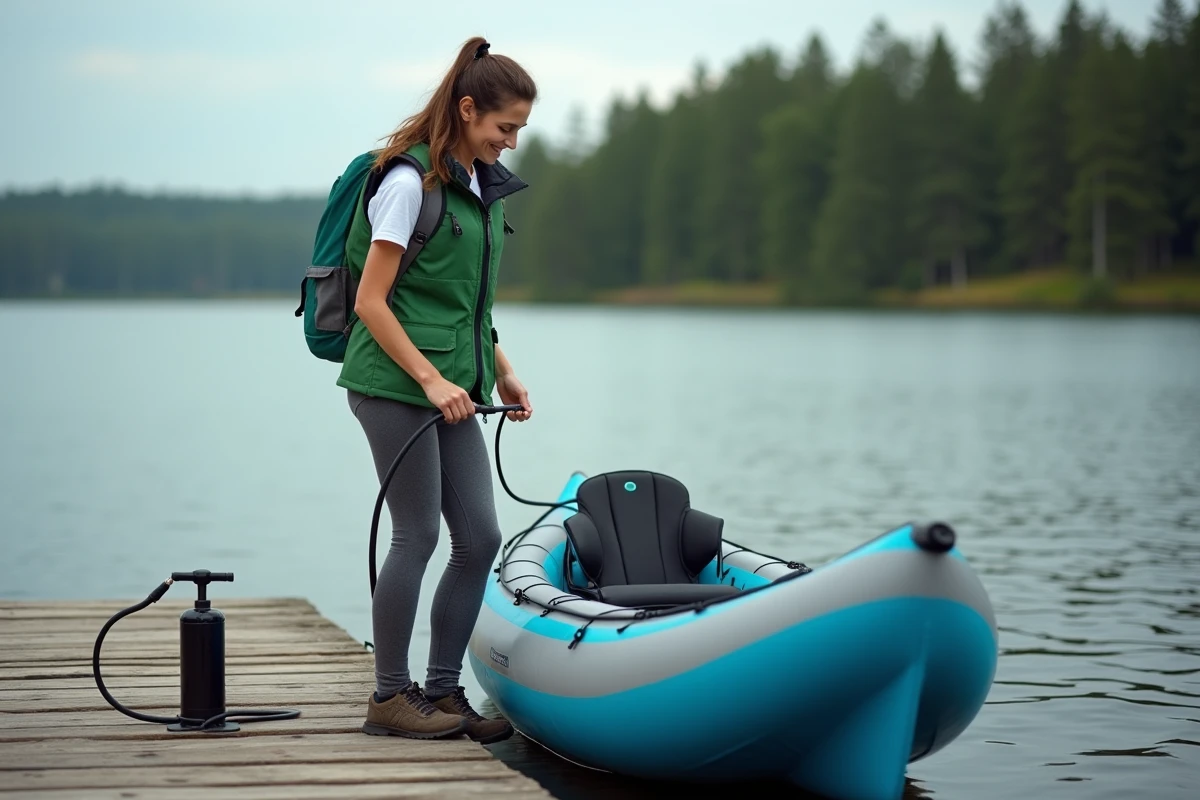
Inflation pressure and valves: what distinguishes tubes and dropstitch floor
Not all compartments of a kayak inflate to the same pressure. Confusing the pressure of the side tubes with that of the dropstitch floor is the most common mistake, and its consequences are measurable on the water.
Side tubes: moderate pressure, structural role
The tubes ensure buoyancy and the overall shape of the kayak. Their operating pressure remains low. Overinflating the tubes deforms the hull and reduces the contact surface with the water, which degrades the trajectory.
An overinflated tube can be felt by touch: the fabric no longer gives at all under thumb pressure. At this stage, it is necessary to slightly deflate before launching.
Dropstitch floor: high pressure, maximum rigidity
The dropstitch floor, made up of thousands of threads connecting the two sides of the fabric, can accept significantly higher pressures. It is this pressure that gives the kayak its rigidity, comparable to that of a semi-rigid hull.
An underinflated dropstitch floor flexes under load and reduces stability. This phenomenon amplifies when the kayak approaches its nominal load, often indicated by the manufacturer for optimal inflation. Lockable high-pressure valves like Halkey-Roberts, increasingly common on recent models, limit accidental leaks during inflation and facilitate reaching the target pressure.
Recommended inflation order
- Start with the dropstitch floor, which requires the highest pressure and the largest volume of air
- Then inflate the side tubes to moderate pressure, checking the symmetry of the hull
- Finish with the seat or secondary elements, which require little pressure
The pressure gauge remains the only reliable tool for monitoring pressure. Without a gauge, the tactile method (thumb pressure) provides a rough approximation, insufficient for high-pressure floors.
Outside temperature and pressure management before launching
The physics of gases imposes a parameter that many practitioners overlook: internal pressure increases when temperature rises. A kayak inflated to the correct pressure in the morning may become overpressurized after an hour in the sun on the shore.
Recent preparation guides recommend inflating slightly below maximum pressure in very hot weather, then readjusting once the craft is in the water. The water cools the structure, which lowers the pressure by a few tenths of a bar. This final adjustment ensures stable pressure during the outing.
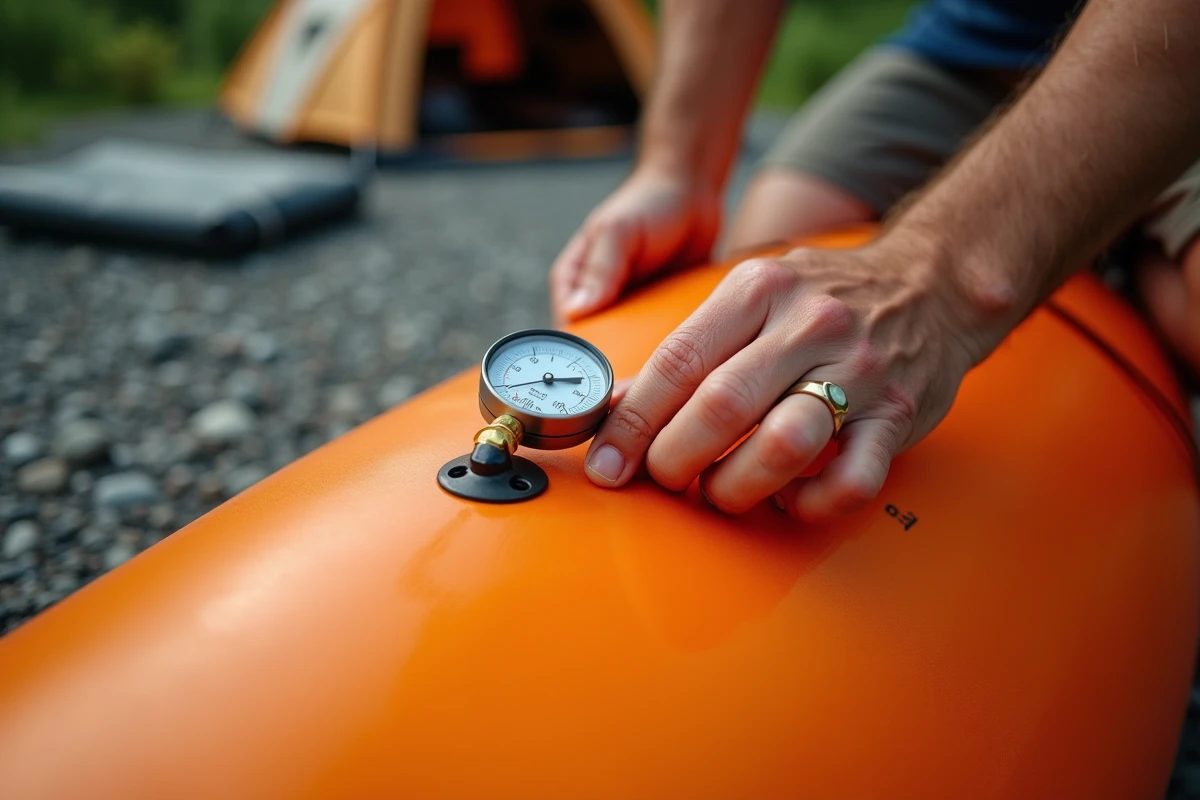
Conversely, in cool weather, the kayak may seem sufficiently inflated in the shade but lose rigidity once in cold water. A systematic check at the water’s edge, just before paddling, corrects these temperature-related discrepancies.
- In hot weather: inflate to slightly below maximum pressure, adjust after launching
- In cool weather: inflate to the recommended maximum, check pressure after a few minutes in the water
- Prolonged exposure to sunlight: to be avoided, as localized overpressure weakens the seams and valves
Signs of faulty inflation and valve checking
A hissing sound from the valve during inflation does not necessarily mean that maximum pressure has been reached. On practitioner forums, this symptom regularly appears, and the identified causes are numerous.
A hissing sound before nominal pressure often indicates a valve or nozzle defect. A poorly seated pump adapter allows air to escape before the compartment is full. A valve flap clogged with sand or salt produces the same effect.
Before each outing, check that the valve flap is in the open position during inflation, then in the closed (locked) position once the pressure is reached. On Halkey-Roberts valves, the position of the internal spring can be checked by pressing the central button: pressed down, it allows inflation; raised, it locks the air inside.
A kayak that loses pressure in less than an hour after inflation has either a micro-leak at a seam or a valve defect. The classic test is to apply soapy water around the valves and seams to spot bubbles.
The quality of inflation determines everything else: trajectory, stability under load, seating comfort, and the longevity of the craft. A reliable pressure gauge and a pump suitable for the kayak’s valve type are enough to eliminate most problems encountered on the water.