
Every year in France, millions of pieces of furniture end up at waste collection centers, even though some are still usable or repairable. Charities, peer-to-peer donation platforms and reuse centers take in a fraction of this volume, but each organization has its own acceptance criteria. Knowing where to take a piece of furniture based on its actual condition—and anticipating a refusal—is just as important to a successful donation as the desire to give.
Damaged but repairable furniture: the check nobody does before donating
Most furniture donation guides assume the item is in good condition. In practice, a drawer that no longer slides, a wobbly leg or peeling veneer can be enough for a charity to turn down a piece of furniture. The usual response is then to leave it on the sidewalk or take it to a waste collection center.
There is a third option. The eco-organization ecosystem promotes the repair bonus, a scheme that reduces the cost of work carried out by a certified professional. Initially focused on electrical equipment, the bonus is gradually expanding to other categories of household goods. Having a piece of furniture repaired before offering it for donation makes it acceptable to a charity or easier to pass on to another individual.
Before looking for someone to take it, it is therefore worth checking whether repair is an option. A piece of furniture with a sound frame but damaged finish (peeling varnish, torn fabric) can be given a second life for a few dozen euros by a certified upholsterer or cabinetmaker. If you want to give away furniture for free, this initial assessment helps you avoid confusing donation with simply getting rid of something.
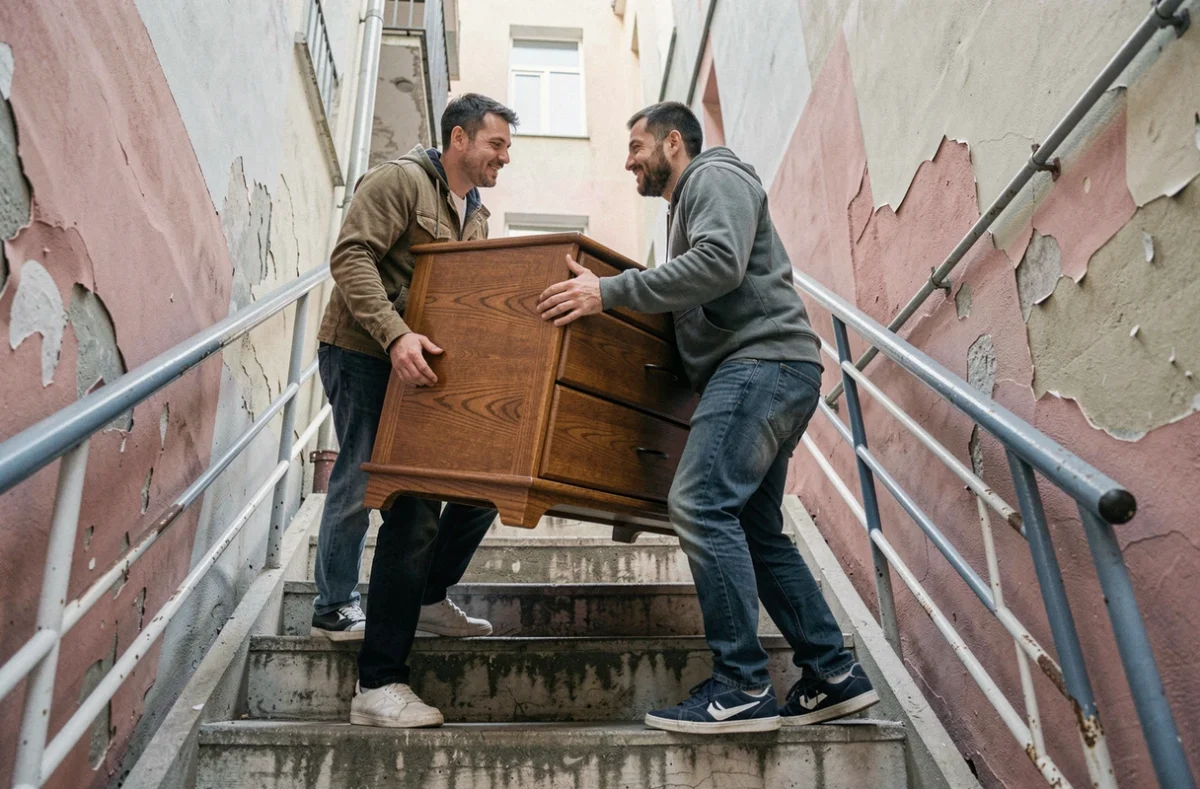
Home collection for furniture donations: how services vary by organization
Emmaüs, Secours Populaire, the Red Cross, local reuse centers and the Envie network take furniture. Not all of them offer home collection, and those that do may not provide it everywhere or for every type of furniture.
Home collection must be confirmed with the local organization before making any arrangements. Emmaüs says donations can be dropped off directly or collected by appointment, but each group sets its own conditions. Some branches only accept donations above a minimum volume, while others exclude sofa beds or disassembled wardrobes.
What charities check before accepting furniture
- Structural condition: furniture with a broken or worm-eaten frame will be refused, even if it has aesthetic value. Charities resell or redistribute items; they do not restore them.
- Cleanliness: a stained mattress, a sofa soaked with tobacco odor or furniture infested with pests will not pass inspection. Cleaning items before donating them is an implicit requirement.
- Logistical constraints: furniture that is too large to fit in a standard van may be refused if the organization does not have a suitable truck or available movers.
Emmaüs’ online locator lets you search by item type and distinguish between drop-off and home collection. It is the most reliable starting point for checking whether a donation is possible in your area.
Donating directly to individuals through a platform: Geev and other options
Peer-to-peer donation platforms such as Geev bypass charities’ criteria. Geev says that several hundred thousand new items are posted each month, including furniture. The process is simple: post a listing with a photo, interested people get in touch, and the item is collected in person.
This works well for furniture in decent condition that charities have turned down because of limited space or a lack of local demand. A well-kept 1990s desk, for example, is more likely to find a new owner on a local platform than at an already full reuse center.
Limitations of peer-to-peer donations
The donor is responsible for all the arrangements involved in making the item available. There is no organized collection or time slot set by an organization: the recipient has to come and pick up the furniture, which means agreeing on a location, time and transport. For a heavy item, arranging help to carry it can prevent missed pickups.
Another limitation is damaged furniture. A visibly damaged item tends to attract few responses on a platform. The temptation is then to leave it on the sidewalk, which can amount to illegal dumping in many municipalities.

When a donation is refused: choosing between reuse, repair and collection services
Furniture refused by a charity and ignored on a donation platform is not automatically waste. Three options remain before taking it to a waste collection center:
- Have it repaired by a certified professional, potentially using the repair bonus promoted by ecosystem, then put it back into circulation by donating it or selling it for whatever someone is willing to pay.
- Take it to a reuse center that recovers materials: some collect furniture to salvage the wood, metal or fabric, even if the item is no longer usable as it is.
- Arrange collection through your municipality’s bulky waste service, following the local schedule and sorting instructions so the furniture can be sent to the appropriate recycling stream.
Confusing donation with disposal is the most common mistake. Furniture that no organization will accept as it is should not end up on the sidewalk just because it was “offered.” Having a backup plan before contacting a charity means taking the realities of sorting into account when making a donation.
Furniture donations work best when donors do the groundwork: assess the item’s actual condition, contact the local organization before loading the van, and consider repairs if the item might be refused. Furniture is most likely to be passed on when it arrives clean, complete and easy to transport. For everything else, a reuse or municipal collection service is the right way to go.